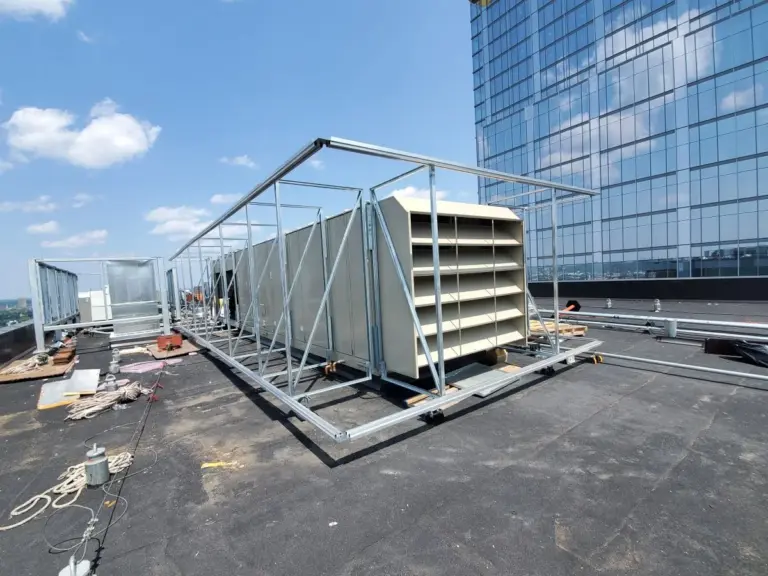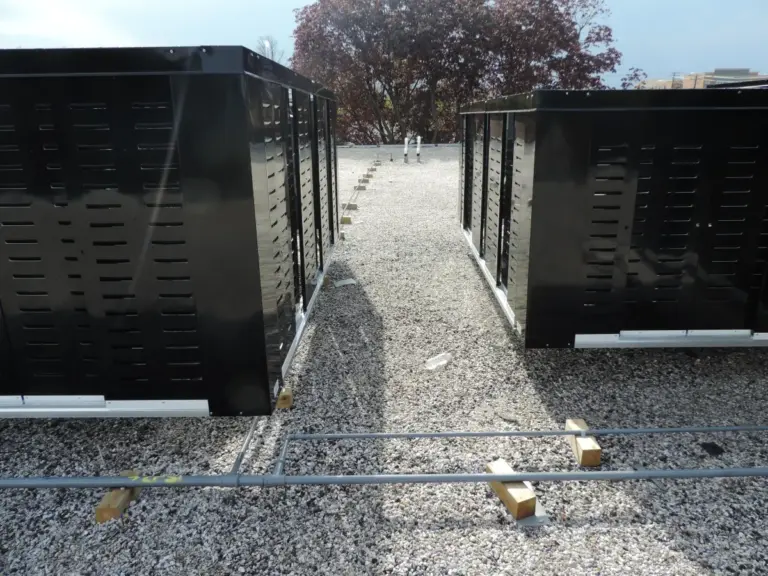

The roof is finished, the mechanical equipment is in place, and now the project needs screening. Does that mean cutting more openings through the roof membrane? Not necessarily. Some rooftop units can support a screen directly, which means the enclosure doesn’t need its own structural penetrations. On an existing building, that’s worth checking before planning a separate support system.
At North American Enclosures, we offer direct-attached screens for compatible HVAC equipment. The important word is compatible. Two RTUs can look nearly identical and still have different frames, service-door locations, or attachment restrictions. If you’re considering non-penetrating rooftop HVAC screens, we’d start with the equipment itself. Its construction will tell us much more than a general request for a screen that doesn’t penetrate the roof.
What Does Non-Penetrating Actually Mean?
With our direct-attached system, the screen mounts to the HVAC cabinet or equipment frame rather than to posts connected through the roofing. When the unit is suitable for that attachment, the screen adds no penetrations through the roof membrane. The equipment may still sit on a curb, with ductwork or other connections passing through the roof. It’s the screen supports that don’t require new openings.
That distinction matters on a finished roof. Separate supports can involve structural connections and roofing details that weren’t part of the original installation. Direct attachment avoids that work for the screening itself, and the panels sit close to the equipment rather than extending across a larger rooftop area. Those advantages are useful, but they only apply if the unit can safely carry the enclosure.
Can Your RTU Support a Direct-Attached Screen?
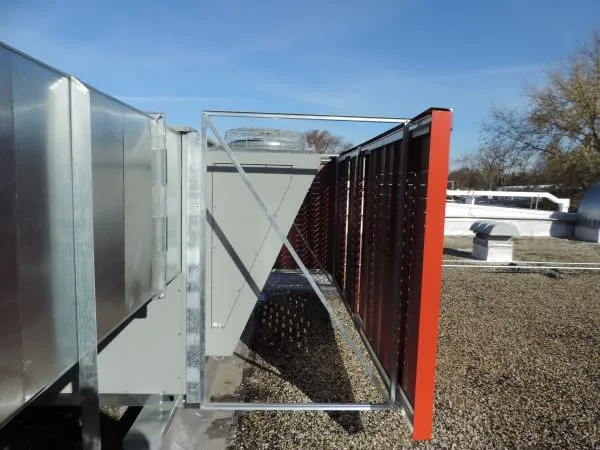
Our direct-attached systems can be used with compatible packaged RTUs, DOAS units, multi-zone equipment, and makeup air units. We wouldn’t select the mounting method from that list alone, though. We need to know the manufacturer and model, how the cabinet is built, and where an enclosure can attach. A unit that appears suitable on an elevation may have framing or access requirements that change the recommendation.
The screen must also be supported under the wind loads applicable to the project. North American Enclosures offers systems engineered to wind ratings up to 225 mph, but that isn’t blanket approval for any unit or building. Screen dimensions, exposure, attachment details, and the equipment’s supporting structure all need review. If the equipment manufacturer restricts attachments, that’s another reason to consider a different system rather than assume the cabinet can carry the screen.
This is especially important when the project involves older equipment. A model number on an original drawing may not match the unit installed today. Before treating direct attachment as an option, we’d want to confirm the actual equipment and any changes made since installation. The same applies when an RTU gets substituted during bidding or procurement. A replacement may have similar capacity but different framing or access doors, so an enclosure planned around the original model should be reviewed again.
Service Access Can’t Be an Afterthought
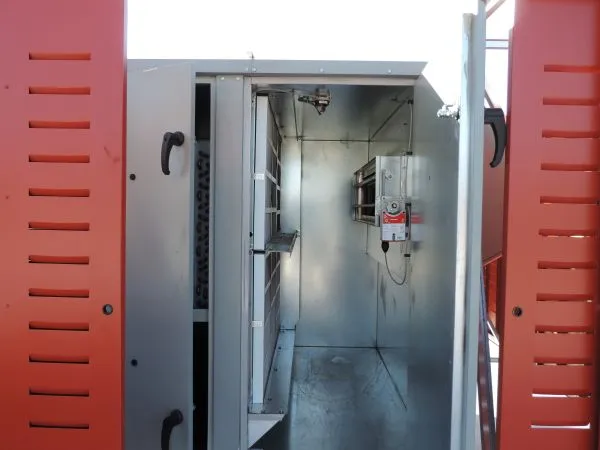
A non-penetrating screen still has to work for the technician who comes back to service the RTU. Our direct-attached systems use sliding panels so the technician can open the screening and then open the equipment’s service doors. The layout needs to accommodate filters, electrical compartments, and other service points without putting an enclosure support in the way.
Airflow is just as important. The equipment manufacturer’s ventilation and maintenance clearances still apply, even if the screening is mounted directly to the unit. Ductwork, piping, flues, and economizers can affect the panel arrangement, especially on a crowded roof. Those conditions may call for custom rooftop HVAC screening that accommodates the equipment and leaves the required service space. We’d review the actual rooftop configuration before proposing panel locations.
Post-Mounted Versus Unit-Mounted Screening
The practical difference is what holds the enclosure up. A unit-mounted screen relies on suitable framing in the HVAC equipment. A post-mounted screen connects to the building structure independently of the units behind it. That can make post-mounted screening useful when several RTUs need to sit behind one continuous enclosure, particularly if their sizes or locations vary.
North American Enclosures’ post-mounted system is designed with minimal roof penetrations, not zero penetrations. Posts still need structural connections, and the roofing details around those connections must be addressed. A larger screened area may justify that approach, but it isn’t necessary to use posts just because a project calls for rooftop screening. If direct attachment is possible, we’d compare the two arrangements against the equipment, service access, and roof conditions before making a recommendation. Post-mounted systems also offer sliding or fixed panel arrangements, depending on access needs. Where the posts fall matters: a support in front of a service door can create a problem even if the screen looks fine on the elevation.
If Direct Attachment Isn’t Suitable
Sometimes a unit doesn’t have the framing needed for direct attachment, or its manufacturer doesn’t permit it. That doesn’t automatically make posts the only choice. North American Enclosures also offers curb-mounted screening, including the Clip-Lock curb system used for applications such as exhaust fans and smaller condensing units. The Clip-Lock curb replaces the equipment manufacturer’s standard curb and provides support for both the equipment and the screen.
Curb-mounted screening isn’t the same as a direct-attached, non-penetrating enclosure. Its connection to the building and roofing needs to be reviewed as part of the proposed installation. For larger equipment or unusual roof conditions, we’d want to look at the equipment specifications and available structural information before advising which mounting approach is appropriate.
What Changes on an Existing Roof?
On a retrofit, the biggest unknown is often the difference between the drawings and what’s actually on the roof. An RTU may have been replaced, or new piping and ductwork may have been installed nearby. Those changes can affect available attachment points, service access, and how close the panels can sit to the equipment. Current photos and the installed unit’s model information are often more useful than relying on older plans alone.
The condition and layout of the existing roof matter, too. Direct-attached screening can avoid new roof penetrations for the enclosure, but that benefit doesn’t override equipment limitations. We wouldn’t recommend mounting to a cabinet without confirming it can support the loads. If the installed unit isn’t suitable, we’d review other screening options while accounting for the roof and equipment already in place.
What We’d Review Before Recommending a System
For an initial conversation, the equipment manufacturer and model are a good starting point. A roof plan, equipment schedule, and photos can help us see how the units are arranged and what’s around them. If the architect has specified a panel style or identified which equipment requires screening, we’d want to see those requirements as well. Sightlines establish which units need screening; the equipment height determines the screen height once screening is required.
You don’t have to decide between direct-attached, curb-mounted, and post-mounted systems before reaching out. We can review the available information, talk through the mounting options, and identify anything else needed to evaluate the project. If the project is still in design, we can discuss the proposed system before equipment selections are final. If the units are already installed, current photos and specifications help us review the conditions that actually exist. Either way, we’d rather identify an attachment limitation early than have it discovered during installation.
Frequently Asked Questions
Can a direct-attached screen be added to an existing RTU?
Yes, if the equipment is suitable for attachment and has the structure needed to support the screen. We’d review the actual model, its condition, and its service requirements before confirming that approach.
Does non-penetrating mean there are no openings in the roof?
No. The equipment may already have a curb, ductwork, or other roof penetrations. With direct-attached screening, the enclosure doesn’t add new penetrations for its own supports.
What if the equipment manufacturer doesn’t allow attachments?
We’d review alternatives, including curb-mounted or post-mounted screening. The appropriate choice depends on the equipment, roof structure, and the space needed for airflow and service.
Can one roof use more than one mounting system?
Yes. Compatible RTUs might use direct-attached screens while another equipment area uses a post-mounted enclosure. There’s no requirement to use the same mounting method across the entire roof.
Find Out Whether Direct Attachment Will Work
If avoiding new roof penetrations is important to your project, the next question is whether the equipment can support a direct-attached screen. Send us the equipment details and whatever roof information you have available. We’ll help you evaluate the options without assuming that one mounting method works everywhere.
Contact North American Enclosures or call 888-308-5296 to discuss your rooftop screening project.