
Why Non-Penetrating Rooftop HVAC Screens Matter in Modern Construction
Rooftop systems have become standard across commercial properties. From retail centers to medical offices, mechanical units sit in plain view. Over time, municipalities began requiring concealment, and owners started paying closer attention to long-term roof performance. That shift pushed many decision makers to explore non-penetrating rooftop HVAC screens as a practical solution.
You might notice that roofing warranties often include strict language about penetrations. Each fastener introduces risks. In some cases, a single poorly sealed anchor can create problems that surface years later. Because of that reality, owners frequently look for alternatives that reduce exposure without sacrificing stability.
At the same time, aesthetics matter more than they once did. Tenants care about building appearance, and local review boards often do as well. When rooftop equipment screens blend with the architecture, properties feel more complete. That combination of compliance, risk reduction, and visual improvement explains why this category continues to grow.
Understanding How Non-Penetrating Rooftop HVAC Screens Work
Traditional HVAC screen walls rely on mechanical attachments that secure directly into the roof deck. That method can work, but it requires coordination with the roofing contractor and careful flashing. By contrast, non-penetrating rooftop HVACs creens use engineered structural support systems to distribute weight evenly.
Instead of anchoring into the membrane, installers assemble framing sections that integrate directly with rooftop units or structural supports as required by the project. Engineers calculate wind loads based on location, height, and exposure. Many project teams review detailed engineering specifications during this phase to confirm structural assumptions before fabrication begins. The engineered attachment strategy resists uplift forces while keeping the mechanical equipment screen secure without unnecessary roof penetrations.
Many clients find this approach easier to manage during construction. Roofing crews complete their scope without waiting for structural penetrations. When comparing structural strategies, some owners evaluate direct attached and post mounted options to better understand long-term service implications. The sequencing feels cleaner, and the risk profile often improves as a result.
How They Differ From Conventional HVAC Screen Walls
Conventional HVAC screen wall systems often require structural review for attachment points. Contractors must coordinate blocking, curbs, or steel supports. That coordination adds time and complexity, especially on retrofit projects.
With these systems, the emphasis shifts to engineering calculations rather than structural anchoring. While you still need proper analysis, the roof membrane remains intact. For many property owners, that distinction alone influences the decision.
Key Benefits Property Owners Evaluate
When owners review options, they usually focus on risk, compliance, cost, and long-term value. The conversation rarely centers on one factor alone. Instead, decision makers weigh tradeoffs based on their property goals and tolerance for future maintenance exposure.
Roof Protection and Warranty Considerations
Roof assemblies represent a significant capital investment. It often feels counterintuitive to drill into a new membrane just to conceal equipment. Even when penetrations are properly flashed, they remain potential maintenance points.
By eliminating those penetrations, non-penetrating rooftop HVAC screens reduce variables. While no solution removes all risk, this approach minimizes direct membrane disruption. Many roofing manufacturers prefer that arrangement because it keeps their warranty conditions simpler.
Compliance With Local Screening Requirements
Cities frequently require rooftop equipment screens to shield units from street-level or neighboring views. Planning departments may specify minimum heights or full visual blocking. Some communities also expect screens to align with the architectural character of the building.
In those situations, a well-designed mechanical equipment screen addresses both function and appearance. Engineers size the panels to match the equipment profile. Designers then select finishes that coordinate with the façade. Some owners review curb versus post mounting differences when determining how attachment style may affect roof conditions. That combination often satisfies review boards without forcing structural redesign.
Aesthetic Integration and Tenant Perception
Rooftop systems rarely enhance the skyline. Exposed ductwork and condensers create visual clutter. When screen walls conceal that equipment, the building exterior appears more intentional.
What tends to stand out is the difference in perception. Prospective tenants may not analyze rooftop details directly, yet they notice overall cohesion. A clean roofline communicates maintenance discipline and long-term ownership. Over time, those subtle signals influence leasing conversations more than many people expect.
Engineering and Wind Load Realities
Wind resistance drives much of the technical discussion. Engineers evaluate exposure category, building height, and geographic wind speeds. Engineered structural support weight increases as uplift pressures rise. That calculation ensures the screen system performs as intended under design conditions.
It seems straightforward, but proper documentation matters. Building officials often require stamped engineering to confirm compliance. For a broader view of available screening system configurations, some decision makers examine structural approaches before finalizing design direction.
Structural capacity also deserves attention. Although screening systems introduce additional structural considerations, proper engineering ensures compatibility with the building design. In some cases, especially with older buildings, a structural review provides reassurance. Owners who invest in early analysis usually avoid last-minute surprises.
Installation Process in Practical Terms
Most installations follow a predictable sequence. Contractors begin with field measurements and equipment verification. Accurate dimensions prevent panel misalignment and costly adjustments.
Next, engineers finalize engineered structural support calculations and layout drawings. Once materials arrive on site, crews coordinate approved attachment points according to the engineered layout. They assemble the framing and secure the panels based on documented connection details.
The final step involves inspection. Installers verify alignment, spacing, and engineered structural support distribution. Building officials may review the system for compliance. When teams coordinate effectively, the process moves efficiently without interfering with other rooftop trades.
Common Installation Missteps to Avoid
Some projects underestimate wind exposure, particularly on taller buildings. Insufficient engineered structural support compromises performance and creates liability. Reviewing completed rooftop installations across property types can provide practical context before final engineering approval.
Another oversight involves maintenance access. Rooftop equipment requires periodic service. If screen layouts ignore clearance needs, technicians struggle to perform routine work. Thoughtful design accounts for both concealment and accessibility.
Wind Ratings and Performance Standards
Wind resistance often becomes the deciding factor in screen selection. Engineers review site exposure, building height, and regional wind maps before approving any configuration. When wind pressures increase, attachment strategy and structural design matter more than aesthetics.
Well-engineered systems can achieve wind ratings up to 225 mph based on 3-second gust criteria. That level of performance provides confidence in coastal and high-wind regions. Our systems benefit from advanced manufacturing expertise that supports precision fabrication and long-term structural reliability in demanding rooftop environments.
Testing standards and stamped calculations give building officials and owners measurable reassurance. In practice, transparent documentation reduces approval friction and long-term liability concerns.
About Our Screen Systems
Every project presents unique constraints. Equipment layouts vary, roof structures differ, and service access requirements shift from building to building. For that reason, we offer multiple screening systems engineered to meet specific performance and equipment demands across commercial applications nationwide.
Manufactured by Spinnaker Industries, our HVAC screening systems combine engineered performance, long-term durability, and seamless architectural integration. This partnership strengthens quality control at every stage, from fabrication through field installation.
1. Direct Attached or Unit Mounted Screening Systems
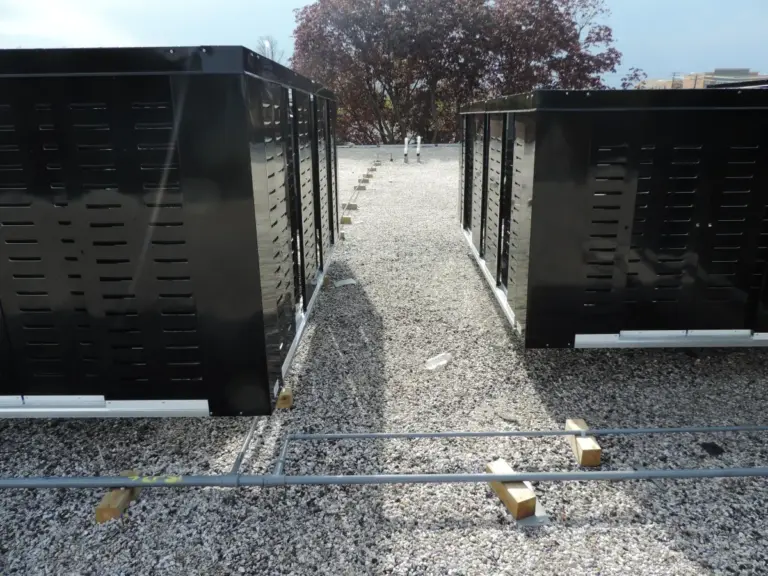
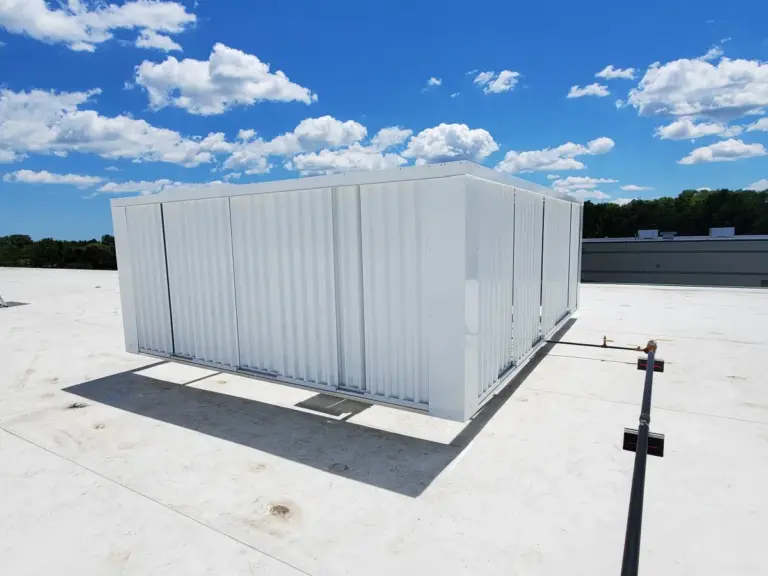
Our Direct Attached or Unit Mounted screening system offers a clean, integrated look by fastening directly to rooftop mechanical units without requiring roof penetrations. This makes it an ideal choice for both new construction and retrofit projects that aim to preserve the roof membrane. The low-profile configuration conceals equipment efficiently while maintaining easy access for service and maintenance.
Sliding panel designs allow unobstructed access on all sides, and equipment doors can open up to a minimum of 90 degrees. The result is a streamlined appearance that blends seamlessly with the building architecture while supporting long-term functionality.
2. Post Mounted Screening Systems
The Post Mounted system is a freestanding solution that works independently of rooftop equipment. It is well suited for projects that require consistent sightlines or need to screen multiple units within a unified enclosure. Adjustable layouts and variable heights allow customization to specific project requirements.
This configuration provides a professional, clean appearance while maintaining easy access for service and maintenance. Because it does not rely on attachment to individual units, it offers flexibility when equipment changes over time.
3. Curb Mounted Screening Systems
The Curb Mounted system works well for rooftop equipment that cannot accept Direct Attached screening due to a lack of internal structure, such as exhaust fans or condensing units. It attaches directly to the roof structure and is flashed in with the roofing system similar to a standard curb detail.
This approach supports both new construction and retrofit projects. It provides consistent concealment while preserving proper airflow and maintenance access. With proper oversight, rooftop equipment screens can perform for decades without major intervention.
Partnership Strength and Field Experience
Long-term performance rarely comes down to one component alone. It reflects material selection, fabrication quality, engineering discipline, and field experience. Over the years, we have refined our screening systems through real-world installations across varied climates and building types.
Our partnership with Spinnaker Industries strengthens that foundation. Their expertise in advanced coating systems supports durability in demanding rooftop environments. While engineering determines structural stability, finish performance plays a major role in how a system ages over time.
Experience in the field also shapes how we approach design decisions. We have seen how wind exposure, service access, and equipment modifications affect performance years after installation. Because of that exposure, we prioritize practical details that support maintenance teams rather than complicate their work.
Many clients find that this combination of tested engineering and material partnership provides reassurance during evaluation. Instead of relying on assumptions, they look at documented performance, coating consistency, and installation history. That broader perspective often carries more weight than short-term pricing comparisons.
Frequently Asked Questions
Do non penetrating rooftop HVAC screens damage the roof membrane?
Direct attached screen systems attach direxctly to the cabinet of the hvac unit avoiding contact with the roof. When conditions require additional support our non penetrating roof supports with protective pads are used.
Are HVAC screen walls required everywhere?
Requirements vary by municipality. Many cities mandate screening, especially in visible commercial corridors.
How long do rooftop equipment screens last?
Screen systems with quality finishes can last for decades with routine inspections. Ongoing manufacturing advancements continue to influence fabrication standards and performance expectations across the industry.
Can a mechanical equipment screen handle high winds?
Properly engineered structural support systems are designed to meet local wind load criteria.
Making a Smart, Informed Decision
Choosing between attachment methods requires careful thought. You need to balance compliance, structural considerations, warranty language, and long-term maintenance exposure. In many scenarios, non-penetrating rooftop hvac screens provide a practical path that aligns those priorities without overcomplicating the roof assembly.
If you are evaluating options for your property, start with engineering input and a clear understanding of local code requirements. When project variables create uncertainty, submitting a project consultation request can clarify next steps before fabrication begins. A thoughtful review today can prevent avoidable complications later. When you approach the decision strategically, the right screening solution becomes much easier to identify.