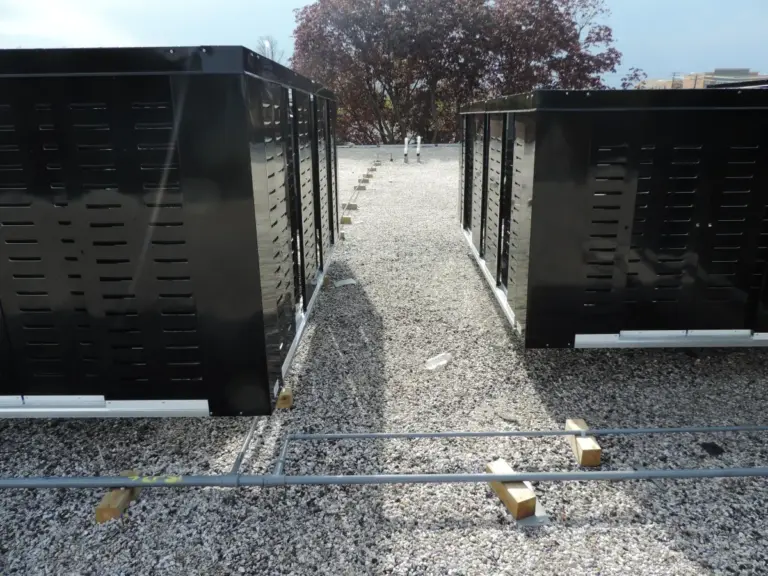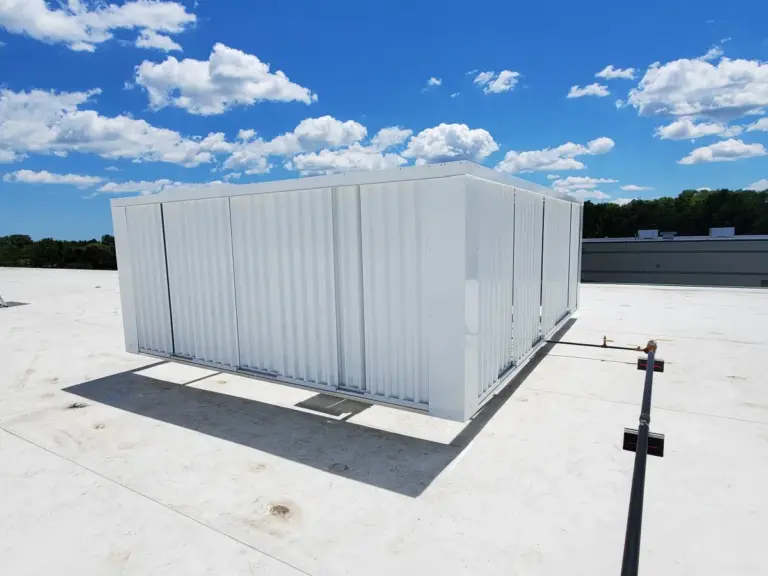

Commercial rooftops rarely match a standard screen layout. HVAC units vary by brand, size, height, placement, airflow needs, and service clearance. Roof vents, curbs, parapets, slopes, access paths, and tight equipment spacing can also affect how a screen system should be designed.
That is why custom rooftop HVAC screening is often the better choice for complex commercial roofs. A custom system can be designed around the roof as it exists. It can account for actual equipment dimensions, rooftop obstacles, airflow clearance, service access, and visual screening requirements before fabrication or installation.
Standard products can create problems when the rooftop layout does not match fixed panel sizes or assumed clearances. Custom HVAC roof screens give project teams more flexibility. They help create a cleaner appearance while supporting installation, maintenance, and long term performance across commercial rooftop equipment screen projects. The custom screening and enclosure projects from Spinnaker show how screening work can adapt to real-world conditions.
Why Standard HVAC Screens Often Create Limitations
Standard HVAC screens can work well when the roof layout is simple. Many commercial rooftops are not simple. Equipment varies, spacing changes, and fixed screen layouts can create problems. Vents, curbs, roof penetrations, and structural details can also interfere with a standard screening layout.
Fixed screen sizes rarely align perfectly with installed equipment. This can lead to field adjustments, installation delays, or uneven visual results. It can also create access issues if the screen blocks equipment doors, service panels, or maintenance paths.
Airflow is another major concern. A screen that is not designed around the equipment can interfere with manufacturer required airflow clearance. That can affect rooftop HVAC performance over time.
Custom rooftop HVAC screens reduce these issues by responding to actual conditions. The system can be planned around unit dimensions, access points, airflow needs, roof conditions, and the desired visual outcome. This is especially useful for commercial HVAC screening projects where architectural appearance, rooftop conditions, and mechanical access all matter.
Designing Around Real Equipment and Layout Conditions
Working With Mixed HVAC Systems
Many commercial rooftops include more than one HVAC brand or unit type. Older rooftop units may sit next to newer replacement equipment. Units may have different heights, cabinet sizes, service doors, and clearance requirements.
Custom rooftop HVAC screening allows these differences to be reviewed together. Instead of treating each unit as a separate problem, the screen system can help unify the rooftop visually. The enclosure can still respect equipment access, airflow clearance, and maintenance needs.
This flexibility is especially useful for retrofit rooftop screening and replacement HVAC unit screening. Existing HVAC equipment often cannot be moved. In those cases, the screen must adapt to the layout already in place.
Matching Field Measurements Instead of Assumptions
Plans do not always match final rooftop conditions. Unit placement, spacing, curb locations, and roof penetrations can change during construction or replacement work. Small differences can affect how a screen system fits.
A custom approach uses actual field measurements and as built conditions. This helps the screening follow the real layout instead of an assumed one. It can reduce field modifications and help create a more consistent finished enclosure.
Accurate dimensions also support better coordination. They help confirm panel lengths, mounting locations, access points, clearances, and visual alignment before installation begins.
Designing Around Vents, Curbs, and Rooftop Obstacles
Planning Around Vents and Roof Penetrations
Rooftop vents and roof penetrations often create design constraints. They may sit near HVAC units or occupy space where a standard screen would normally be installed. If these details are missed early, they can create layout conflicts later.
Custom rooftop HVAC screening allows vents, curbs, and other rooftop obstacles to be included in the design from the beginning. The system can be configured around these conditions while still preserving access and airflow.
This helps avoid awkward field changes. It also helps the final screen look intentional instead of patched together around obstacles.
Navigating Tight and Irregular Layouts
Some rooftops have limited space between units. Others include unusual shapes, slopes, parapets, or structural features that disrupt a standard layout. These conditions can make installation more complex.
A custom commercial roof screen system can be configured to follow the available space. Panels can be sized and arranged around the actual roof conditions. This helps the screen fit the roof without blocking access or airflow. It also creates a cleaner solution for custom rooftop equipment screens and RTU screening systems.
Tight layouts also make service access more important. In many cases, sliding access panels can help technicians reach equipment without removing large sections of the enclosure. This supports routine maintenance and reduces unnecessary disruption.
Choosing the Right Mounting Approach
Not every project needs the same type of rooftop screen system. Some projects benefit from screens that attach directly to the rooftop unit or equipment cabinet. Others need a curb based or post mounted structure. The right choice depends on equipment layout, roof conditions, service access, and structural requirements.
Direct attached HVAC screens and unit mounted rooftop screens can work well when space is limited. These systems stay close to the equipment. They can help create a tighter, more integrated appearance while preserving access and airflow for rooftop unit enclosures and unit mounted HVAC screen systems.
Curb mounted HVAC screens may be useful when the project needs a stable curb based connection between the equipment, enclosure, and roof conditions. This approach can support curb mounted rooftop equipment screens where equipment clearance and roof coordination are important.
Post mounted roof screens may be the right option when the screen must stand independently from the HVAC equipment. This can help with larger spans, irregular equipment layouts, or projects where multiple units need to be screened together. These systems can also support post mounted mechanical screens and larger freestanding rooftop equipment screens.
Some projects require a combination of approaches. A custom rooftop equipment screen can adapt to the actual roof instead of forcing one fixed design across every condition.
Adapting to Roof Conditions
Roof conditions vary widely across commercial buildings. Roof membrane type, slope, curb placement, parapet height, structural support, service paths, and installation access can all influence the screen design.
A custom rooftop equipment screen should account for these conditions early. This helps reduce conflicts between the screen, roof system, and rooftop HVAC equipment. It also supports better planning for roof mounted HVAC screens and commercial rooftop enclosures.
A better fit can also support long term durability. When the screen is aligned with the roof layout, the project is less likely to require late modifications or awkward installation changes.
Color and material choices can also affect the final result. The Spinnaker product catalogue can support product selection when appearance, durability, and visual consistency matter.
Custom Rooftop HVAC Screening and Early Project Planning
Early planning can prevent many rooftop screening issues. Clearance conflicts, vent locations, mounting constraints, access paths, and equipment spacing should be reviewed before the system is finalized.
A custom approach starts by understanding the roof. That includes equipment placement, unit dimensions, visibility requirements, airflow clearance, service access needs, screen panel layout, and equipment door access.
Early planning gives project teams more time to solve problems before installation. It can reduce field adjustments and support a smoother path from design to completed enclosure. The HVAC screen technical specifications can help clarify system requirements before decisions are finalized.
Starting With a Free Consultation
Many projects begin before every detail is finalized. That is normal. A free consultation can help identify the most practical direction based on the information available.
During the consultation, the team can review the rooftop layout, equipment type, unit dimensions, vents, access needs, visibility goals, mounting options, and HVAC equipment clearances. This helps clarify what type of custom rooftop HVAC screening system may fit the project. A direct North American Enclosures consultation can help turn those details into a practical screening direction.
This step is useful for new construction and retrofit projects. It helps project teams move from uncertainty to a clearer screening strategy.
Real-World Application of Custom Screening
A retrofit roof may include older rooftop units, newer replacement units, vents near service doors, and limited space between equipment. A standard screen may not fit those conditions cleanly. Completed North American Enclosures rooftop screening projects show how custom screening adapts to real rooftops.
A custom rooftop HVAC screen can be configured around those constraints. The panels can follow the available space. Access points can be placed where technicians need them. The enclosure can still create a unified appearance across mixed equipment.
That is the value of custom screening on complex rooftops. It helps the finished enclosure look planned, even when the equipment layout is irregular.
Service Access: Designing for Maintenance from Day One
Service access should be part of the screen design from the start. A screen that looks good can still create problems if technicians cannot reach the equipment easily.
Custom rooftop HVAC screening allows access to be planned with the enclosure. Sliding access panels can provide targeted entry points. This helps technicians reach service doors, filters, coils, controls, and other key areas without removing large screen sections.
Better access can reduce service time. It can also limit unnecessary panel removal and reduce wear on the enclosure. On tight rooftops, planned access can also support safer maintenance conditions.
Access points should be based on how the equipment is serviced. They should not be based only on where the equipment is located. This creates a more practical long term solution.
Benefits of Custom Rooftop HVAC Screening
Better Fit for Installed Equipment
Custom screening can match the actual size, height, spacing, and placement of rooftop HVAC units. This reduces installation conflicts and helps the enclosure fit the real roof layout.
Cleaner Rooftop Appearance
A custom screen system can create a more consistent visual result across mixed equipment. This is important when rooftop units are visible from streets, nearby buildings, parking areas, or public spaces.
Improved Maintenance Access
Custom access points and sliding panels can make routine service easier. Technicians can reach the equipment without dismantling the full enclosure.
Reduced Field Adjustments
When the screen is designed around real dimensions and roof conditions, installers are less likely to make major adjustments on site. This can help reduce delays and coordination issues.
Support for Airflow Clearance
Custom rooftop HVAC screening can be planned around manufacturer required airflow and ventilation clearances. This helps the enclosure conceal equipment without interfering with normal operation.
When Custom Rooftop HVAC Screening Makes the Most Sense
Custom rooftop HVAC screening is often the right choice when the roof layout is complex. Mixed equipment brands, unusual spacing, vents, roof penetrations, tight access areas, and irregular layouts can all create challenges for standard screens.
Customization is also useful for retrofit projects. Existing rooftop equipment, curbs, ducts, and vents may already be fixed in place. The screen must work with those conditions instead of requiring the roof to change.
A custom solution can also help when appearance matters. Buildings with visible rooftop equipment, architectural standards, municipal screening requirements, or design guidelines may need a more refined enclosure.
In these situations, custom HVAC roof screens can support appearance, access, airflow, installation, and long term performance.
FAQs
Can HVAC screens be customized for different unit sizes?
Yes. Custom HVAC screens can be designed around different unit sizes on the same rooftop. This includes variations in height, width, placement, and spacing. A custom approach helps enclose each unit without forcing a standard layout that could affect airflow or access.
What if my rooftop has vents or obstructions?
Custom systems can be configured around vents, curbs, roof penetrations, and other rooftop obstacles. These conditions should be reviewed early so the screen can maintain proper clearance, service access, and visual consistency.
Do I need finalized plans before getting started?
No. Many projects begin with a consultation before plans are fully finalized. The goal is to review existing information, identify constraints, and develop a screening direction that can adapt as the project moves forward.
Are custom HVAC screens available in different colors?
Yes. Color options can help align the screen system with the building’s appearance, design requirements, or surrounding materials. Material choices may also affect durability and long term visual consistency.
How does custom rooftop HVAC screening improve service access?
Custom rooftop HVAC screening can place access points where technicians actually need them. Sliding panels can help technicians reach service doors and maintenance areas without removing large portions of the enclosure. This supports maintenance access panels, sliding screen panels, and service friendly HVAC screens.
Can custom HVAC screens work for retrofit projects?
Yes. Retrofit projects often benefit from custom rooftop HVAC screening because existing equipment, curbs, vents, and roof conditions may already be fixed in place. A custom system can adapt to those conditions instead of requiring major changes to the roof layout.
What mounting options are available for custom rooftop HVAC screens?
Common options include direct attached systems, unit mounted systems, curb mounted systems, and post mounted systems. The best option depends on the equipment type, roof conditions, service access needs, airflow clearance, structural requirements, and overall rooftop mechanical screening goals.
Conclusion: A Practical Approach to Complex Rooftop Screening
Rooftop conditions rarely follow a predictable pattern. Equipment varies, and layouts shift. Vents, curbs, access paths, and roof conditions can make standard screens difficult to apply effectively.
Custom rooftop HVAC screening offers a more adaptable approach. It responds to the actual conditions of the site. It helps create a system that fits the roof functionally and visually.
If your rooftop layout includes mixed HVAC units, vents, tight clearances, or unusual roof conditions, a standard screen may not be the right fit. Contact North American Enclosures for a free consultation. The team can review your roof layout, equipment dimensions, airflow needs, visibility requirements, mounting options, and service access needs. From there, they can help identify the right custom rooftop HVAC screening system for your project.