
Why RTU Screens Matter for Commercial Buildings
Rooftop HVAC equipment rarely attracts attention until someone points it out. Yet once you notice exposed units sitting above a clean facade, it often feels unfinished. Many municipalities require rooftop equipment screens for precisely that reason. Building owners who address screening early usually avoid friction later in the approval process.
From a marketing perspective, presentation influences perception. When teams review detailed engineering specifications, they often uncover structural or wind considerations that influence screen design decisions. Investors, tenants, and inspectors evaluate visual order as a signal of operational discipline. When mechanical systems sit exposed, people sometimes question what else may have been overlooked. That reaction may not always be fair, but it is common. Thoughtful rooftop unit screening reduces that risk while protecting mechanical performance.
In practical terms, screening also supports compliance and asset protection. You might notice that local codes focus heavily on visibility from street level. That detail shapes how architects position equipment and how contractors design mechanical equipment screens. Understanding these dynamics helps you make informed decisions rather than reactive ones.
What Are RTU Screens and How Do They Work?
Most commercial buildings rely on rooftop units to manage heating and cooling. These systems draw air in, condition it, and circulate it through ductwork below. Because they operate in open environments, they face constant exposure to wind, debris, and shifting temperatures. Screening surrounds that equipment without interrupting performance.
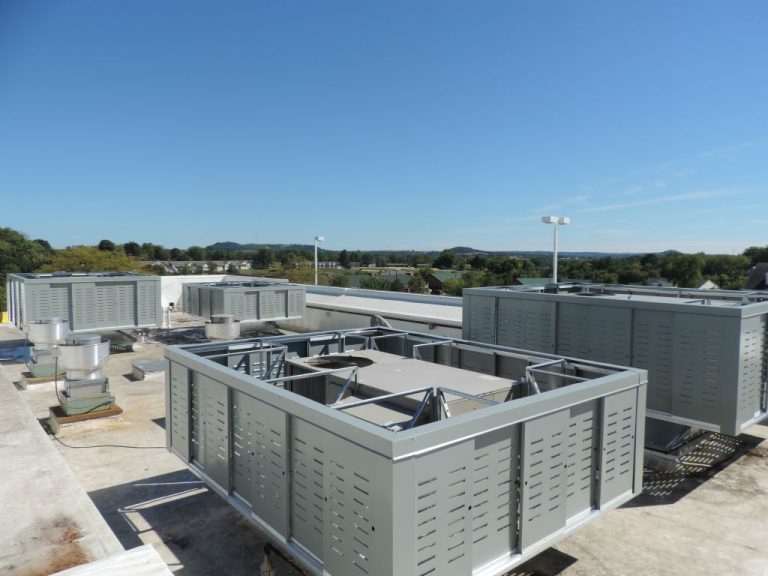
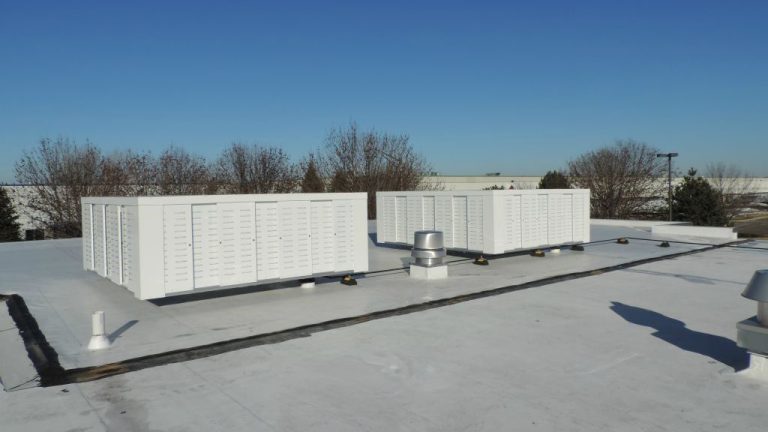
Well-designed RTU screens create a visual barrier while maintaining required airflow clearances. Panels may include louvers or perforations that allow intake and exhaust circulation. In some cases, designers use solid framing with calculated spacing to preserve ventilation. What tends to stand out in successful projects is the balance between concealment and mechanical function.
The concept sounds simple, yet execution requires coordination. Mechanical engineers calculate airflow needs. Architects review sightlines. Contractors confirm structural attachment points. When teams collaborate early, screening integrates seamlessly into rooftop systems instead of feeling like an afterthought. Reviewing available screen system options during schematic design helps avoid reactive adjustments later.
Code Compliance and the Strategic Role of RTU Screens
Local zoning ordinances often require rooftop equipment to remain hidden from public view. Inspectors typically check sightlines from adjacent streets and properties. If units remain visible, project approvals may stall. That delay can ripple through tenant move-in schedules and financing timelines.
Many clients find that proactive planning reduces these risks. Evaluating curb mounted configurations alongside structural attachment differences clarifies which mounting strategy aligns with roof conditions. By incorporating screening into design drawings from the start, teams avoid last-minute retrofits. It also becomes easier to align screen height with parapet walls or architectural features. This approach supports both compliance and cohesive design.
Beyond municipal rules, design review boards sometimes enforce aesthetic standards. They look for clean rooflines and consistent materials. Rooftop equipment screens help projects meet those expectations without redesigning the building envelope. In competitive markets, that attention to detail can influence how quickly a property leases.
Design Considerations for RTU Screens in Commercial Projects
Effective screening begins with understanding rooftop layout. Equipment size, curb height, and maintenance pathways all shape enclosure design. If screens sit too close to units, airflow may suffer. If they sit too far away, visual concealment weakens.
Airflow remains the primary technical concern. HVAC manufacturers publish minimum clearance requirements around intake and exhaust openings. Ignoring those guidelines can reduce efficiency or shorten equipment lifespan. Many engineers recommend verifying open area percentages when using perforated metal panels or louvered equipment screens.
Wind load also deserves careful attention. Rooftops experience stronger gusts than ground-level installations. Structural engineers often review local wind codes before approving mechanical equipment screens. In some cases, especially on taller buildings, additional reinforcement becomes necessary.
Material selection influences durability. Studying completed commercial installations can reveal how different materials perform across climates and building types. Aluminum resists corrosion and reduces weight. Galvanized steel offers strength but may require protective coatings in coastal climates. Over time, maintenance costs tend to reflect those early material decisions.
Airflow, Performance, and RTU Screens
When airflow becomes restricted, HVAC systems work harder to achieve the same output. You might notice higher energy bills or more frequent cycling. Overheating can also accelerate wear on internal components. For that reason, airflow analysis should never feel secondary.
Design teams often model airflow patterns around screened enclosures. They evaluate intake direction, exhaust velocity, and prevailing wind conditions. This analysis informs panel spacing and open area percentages. In some cases, slight design adjustments significantly improve circulation.
It helps to remember that screening should support performance rather than compete with it. The most effective projects treat mechanical function as the foundation. Visual consistency then builds on that base. When priorities reverse, long-term costs may increase even if the roof initially looks cleaner.
Non-Penetrating Rooftop HVAC Screens and Roof Protection
Roof warranties frequently shape screening strategy. Traditional attachment methods can require membrane penetrations. Each penetration introduces potential leak risk. Non penetrating rooftop HVAC screens avoid that issue by using weighted or ballasted systems.
These systems distribute weight evenly across the roof surface. Installers position bases carefully to avoid concentrated pressure points. Many property managers appreciate this approach because it reduces coordination with roofing contractors. It also simplifies future modifications if equipment changes.
However, ballast calculations require precision. Wind uplift forces vary by region and building height. Engineers typically evaluate local data before approving final specifications. Careful planning protects both the roof and the screening structure.
Installation Best Practices for Rooftop Equipment Screens
Installation often determines whether a system performs as intended. Comparing direct attached installations with post supported systems allows teams to anticipate coordination challenges before crews mobilize. Contractors should review shop drawings closely before staging materials. Confirming structural support locations prevents surprises once crews reach the roof. Coordination with HVAC technicians ensures adequate service access.
Clearances deserve a final check during installation. Technicians need room to open panels and access filters or motors. If maintenance feels constrained, service teams may push back. Over time, that friction can influence overall building operations.
Alignment also matters visually. Even slight inconsistencies can become noticeable from nearby buildings. Taking time to level framing and secure panels properly improves both appearance and durability. In many projects, this extra attention separates average results from professional ones.
Common Mistakes to Avoid
One frequent mistake involves underestimating the required height. If rooftop units remain visible from certain angles, owners may need to retrofit taller screens. That adjustment often costs more than doing it correctly from the start. Early sightline studies reduce this risk.
Another issue centers on airflow assumptions. Some teams assume that any perforated metal panel provides adequate ventilation. In reality, open area percentages vary widely. Without verification, performance may suffer.
Maintenance access also deserves careful thought. If technicians must dismantle panels for routine service, labor costs increase. Designing hinged or removable sections can streamline long-term upkeep. Many clients appreciate this foresight once operations begin.
Frequently Asked Questions About RTU Screens
Do RTU screens affect HVAC efficiency?
They can, depending on design. When airflow clearances meet manufacturer recommendations, performance usually remains stable. Problems arise when panels restrict intake or exhaust movement.
Are rooftop equipment screens required everywhere?
Requirements vary by municipality. Many cities mandate screening for commercial buildings, especially when equipment is visible from public areas. Reviewing local zoning codes provides clarity.
Can screening be added to an existing building?
Yes, retrofit solutions exist for most rooftops. Non penetrating rooftop HVAC screens often work well in these situations. In some retrofit scenarios, sourcing compatible HVAC equipment accessories becomes part of the broader coordination effort. Structural review remains important before installation.
What materials work best for long term durability?
Aluminum and galvanized steel remain common choices. Climate conditions, especially in coastal regions, influence which option performs better over time.
Making a Confident Decision About RTU Screens
Choosing the right screening approach rarely comes down to price alone. Decision makers usually weigh compliance, durability, maintenance access, and long-term performance. When those factors align, the investment tends to feel justified.
It helps to involve engineers, architects, and contractors early in the process. Collaborative planning reduces the likelihood of redesign or retrofit. Over time, that coordination often saves more than it costs.
If you are evaluating rooftop unit screening for a current or upcoming project, start with code requirements and mechanical specifications. Many owners choose to discuss project requirements early to align engineering priorities with budget expectations. Then assess structural conditions and maintenance priorities. A measured, informed approach positions your building for compliance, operational stability, and a more polished public presence.