
Myth #1: All Rooftop HVAC Screening Systems Are the Same
If you have worked on enough projects, you have probably heard this assumption more than once. On the surface, many rooftop HVAC screening systems look similar. Panels, posts, and attachments can appear interchangeable, especially in early design discussions.
From our experience, that assumption is where problems start. Rooftop HVAC screening systems, hvac screening assemblies, and broader roof screen systems are not standardized products. They are systems that vary based on how they attach, how they are engineered, and how they interact with both the equipment and the roof.
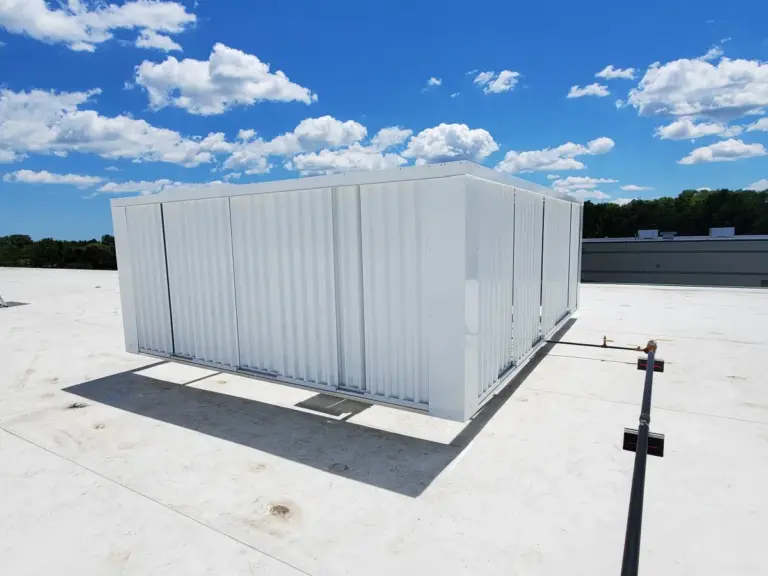
Some systems attach directly to the unit, while others rely on structural supports. This includes approaches used in rooftop unit screening and rtu screening, where system type directly affects access and long-term performance. Some minimize roof penetrations, while others depend on multiple attachment points. These differences affect not just installation, but long-term performance, access, and coordination with other trades.
In simple terms, rooftop HVAC screening issues often begin when system selection is treated like a simple product choice instead of a coordinated system decision. Understanding different system types early helps avoid that mistake.
Myth #2: Airflow Is Always Restricted by Rooftop HVAC Screening
This is one of the most common concerns from both contractors and owners. The assumption is that adding screening around equipment will automatically reduce airflow and impact performance.
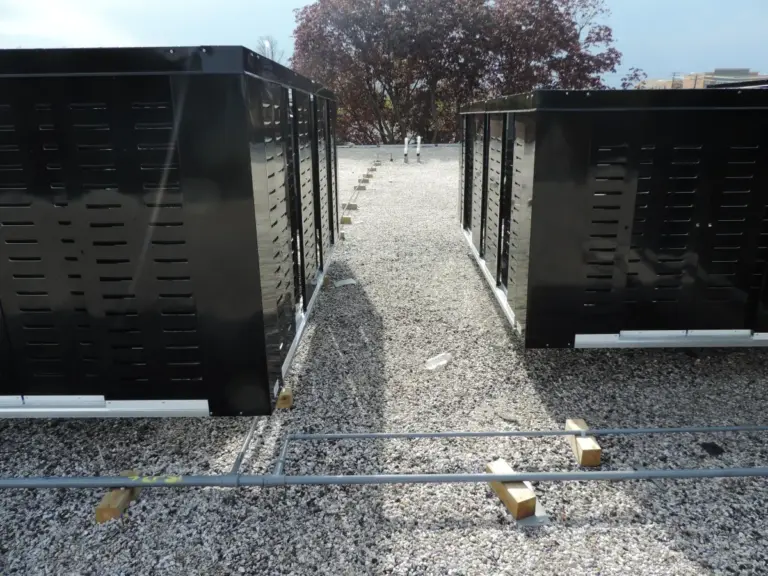
In reality, properly designed rooftop HVAC screening accounts for airflow from the beginning. This applies across hvac screen walls, mechanical equipment screens, and other equipment screening systems that must maintain proper clearances. Clearance requirements from equipment manufacturers are factored into layout, spacing, and panel selection. Often, systems like unit-mounted screening systems are designed specifically to maintain those clearances. When those requirements are met, airflow is maintained and equipment performs as intended.
Problems usually occur when systems are installed too close to the equipment or when spacing is reduced to simplify installation. In those cases, airflow can be affected, and equipment may work harder than it should.
The difference is not the presence of screening. It is whether the system was designed around the equipment or forced to fit after the fact.
Myth #3: Louvers Are Always Better Than Perforated Panels
There is a tendency to default to one panel type without fully evaluating the application. This often happens when rooftop HVAC screening decisions are made quickly without fully understanding how panel type interacts with equipment layout and airflow. Louvers are often assumed to be the safer or more functional choice.
In real-world projects, both louvers and perforated metal panels have their place, and the better choice usually depends on equipment layout and airflow needs. We have seen projects where louvers were selected by default, even when perforated panels would have provided better balance between airflow, concealment, and overall system simplicity. Louvers can provide directional airflow and visual screening, while perforated panels offer a more uniform appearance and can still support airflow when designed correctly.
What tends to get overlooked is how panel choice affects both performance and aesthetics. In real-world projects, panel selection within rooftop HVAC screening or mechanical equipment enclosures directly impacts airflow, visibility, and maintenance access. Clear engineering requirements help clarify how different panel types perform. Factors like open area, sightlines, and equipment layout all play a role in determining which option is appropriate.
Choosing the wrong panel type does not usually cause immediate failure. Instead, it creates subtle issues as the system ages, including inconsistent appearance, airflow inefficiencies, or unnecessary complexity in the system design.
Myth #4: Non-Penetrating Systems Are Less Secure
There is a common belief that systems which avoid roof penetrations are inherently less stable or secure. This assumption is not tied to any specific architectural screening manufacturer, but rather to a misunderstanding of how these systems are engineered. This assumption often comes from the idea that more attachment points automatically mean more strength.
In reality, non-penetrating rooftop HVAC screening systems designed with the right constraints in mind are built to handle wind loads, structural forces, and long-term exposure without relying on excessive penetrations.
The key factor is how the system is engineered. Load distribution, attachment strategy, and integration with the equipment or structure all contribute to overall performance.
Limiting roof penetrations can benefit the project by limiting potential roofing issues and simplifying coordination with waterproofing systems. This is especially relevant when comparing different roof screen systems and attachment strategies. In certain applications, curb-mounted systems can help manage how equipment and screening integrate.
Why These Misconceptions Persist
These misconceptions tend to persist because rooftop HVAC screening is often treated as a secondary scope. It is frequently grouped with other scopes like hvac enclosures or mechanical equipment enclosures without fully evaluating the differences between them. It is not always addressed early in the design process, and decisions are sometimes made quickly based on assumptions or past habits.
Often, value engineering or time constraints lead to simplified decisions that do not fully account for system performance. In others, there is simply a lack of familiarity with how different screening systems actually work. Looking at real-world installations can help teams better understand those differences.
Over time, these assumptions carry from project to project. Without direct experience or clear guidance, teams rely on what they have seen before, even if those approaches created issues.
How to Make Better HVAC Screening Decisions
The projects that avoid these issues tend to approach rooftop HVAC screening differently. Instead of focusing on individual components, they evaluate the system as a whole.
This means looking at how the screening interacts with equipment, roofing, structure, and long-term maintenance. It also means understanding how different system types affect access, airflow, and durability as the system ages.
Comparing different system types early in the project helps clarify these decisions. It also helps teams understand how different rooftop HVAC screening approaches impact long-term performance. In some cases, approaches like unit-mounted screening systems can simplify access and reduce coordination challenges. These systems are often used in rooftop unit screening where maintaining full equipment access is critical.
Other projects may benefit from post-mounted systems when multiple units need to be screened within a single layout. This is common in larger equipment screening applications. In certain configurations, curb-mounted systems can integrate directly with the equipment. These are often used where hvac enclosures or integrated screening solutions are required.
The goal is not to choose a product. It is to choose the right system based on how the building will actually function. This includes understanding how rooftop HVAC screening, hvac screen walls, and equipment screening systems perform as the system ages. Getting early project coordination in place helps align those decisions before construction begins.
In simple terms, most issues tied to rooftop HVAC screening come from assumptions made early in the process. These assumptions often affect rooftop unit screening, rtu screens, and broader equipment screening decisions. Replacing those assumptions with informed decisions is what prevents delays, change orders, and long-term performance problems.
Frequently Asked Questions
Does rooftop HVAC screening always affect equipment performance?
Not when it is designed correctly. Performance issues typically come from poor spacing or lack of coordination with equipment requirements, not the presence of screening itself.
Are non-penetrating systems reliable in high-wind areas?
Yes. When engineered properly, non-penetrating systems are designed to handle wind loads and environmental conditions without compromising performance. Seeing installation footage can help illustrate how these systems perform in real conditions.
What determines the right screening system?
The right system depends on equipment layout, roof conditions, access requirements, and long-term maintenance considerations.
Can rooftop screening be changed after installation?
It can, but changes after installation are often more complex and expensive than making the right decision during design.
Final Thoughts
Rooftop HVAC screening is often treated as a straightforward scope, but the decisions behind it are more complex than they appear.
Small assumptions early in the project can lead to larger issues later, especially when systems are selected without considering how they will perform as the system ages.
If the goal is to avoid delays, added costs, and long-term problems, it comes down to understanding how rooftop HVAC screening systems actually work and making decisions based on that understanding.