
When rooftop space runs out, most systems fail. Ours adapts.
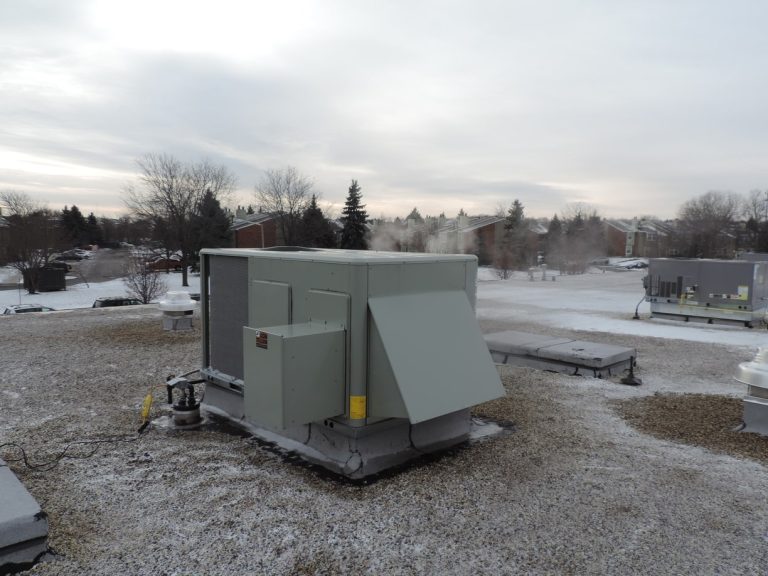
This Hilton Garden Inn project in Bolingbrook, IL, shows exactly how North American enclosures overcome tight spaces and tough obstacles, without cutting into the roof or blowing the budget.
Hilton’s HVAC Headache: Solved
Every project has its own set of challenges. On this one, we were called in after other enclosure systems couldn’t handle it. The hotel’s rooftop had a standard HVAC unit, but it was tightly wedged between a roof hatch and an exhaust fan. Most competitors walked away.
Why?
Because their systems weren’t flexible enough to work without major roof modifications. That’s a deal-breaker in most hospitality settings.
What Makes North American Enclosures Different?
Here’s the thing: we design around problems, not through them.
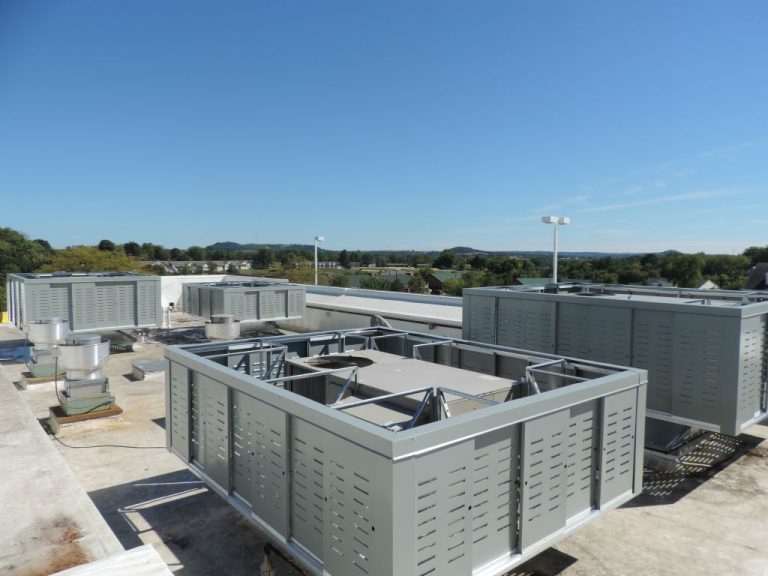
Instead of penetrating the roof (which risks leaks, code issues, and long delays), we engineered a custom HVAC enclosures that worked with the equipment’s existing position. We integrated the nearby obstacles into the enclosure itself, eliminating the need for any penetrations.
That meant no roof damage, no delays, no access or airflow issues, and no excuses.
A Real-World Rooftop Win: Hilton Garden Inn, IL
On a project at the Hilton Garden Inn in Bolingbrook, Illinois, we faced a familiar, yet frustrating rooftop challenge.
The mechanical unit was positioned too close to a roof hatch and exhaust fan, leaving almost no room for traditional screening systems. Other vendors had already walked away from the job. Why? Because their systems required roof penetrations to accommodate the tight layout, and that simply wasn’t an option for the client.
Instead of forcing a compromise, our team did what we do best: we engineered a smarter, cleaner solution.
Using a custom HVAC enclosures, we designed a system that included all surrounding obstacles within the screen footprint, without a single roof penetration. The result was a seamless enclosure that looked clean, performed perfectly, and preserved the roof membrane.
The install was completed without redesigns or structural interference. No delays, leaks or callbacks.
How the HVAC Enclosure Came Together
While every project is different, our process remains consistent and efficient. From the first site evaluation to final installation, we work in alignment with the client’s goals, conditions, and constraints.
We begin by gathering all necessary site details, including measurements, obstructions, and service access requirements. Once we finalize the plans, our team moves directly into design and fabrication. We customize each panel and support system to match real field conditions, instead of forcing a standard template to fit.
To streamline installation, we plan the system around actual rooftop conditions. The crew assembled the enclosure without making any roof penetrations.
This streamlined approach ensures clarity from day one and prevents surprises at the job site. And when obstacles arise, we adjust without missing deadlines or budgets.
Built for Rooftops That Aren’t Perfect
This wasn’t just a box around an HVAC unit. It was a smart, adaptable screening system designed to conceal the unit, maintain proper airflow, and preserve access, while bypassing physical obstructions and protecting the roof membrane. We accomplished it all without modifying the structure or slowing down the schedule.
This is exactly what North American enclosures are built for: real-world jobs where conditions aren’t perfect, but performance still matters.
Why This Matters for Commercial Rooftops
If you’re in commercial construction, building management, or HVAC contracting, you’ve likely run into rooftop equipment that’s less than ideal. These mechanical zones are rarely planned with aesthetics or long-term access in mind.
That’s where we come in. Our systems are designed to adapt to the layout, protect the investment, and keep the building looking sharp, while complying with local codes and structural guidelines.
Whether you’re working on a hotel, restaurant, school, or healthcare facility, if the rooftop is a mess, we can make it work.
FAQ: North American Enclosures
What makes your enclosure systems different from off-the-shelf options?
Our systems are custom-designed to fit your rooftop layout, no matter how complex. We don’t force the site to match our system, and instead adapt the system to the site.
Do you need to cut into the roof to install your enclosures?
No. One of our biggest advantages is that we can install around existing units and obstacles without roof penetrations, preserving the roof membrane.
How long does a typical project take?
Timelines vary, but because we handle everything from design to delivery, we can typically move faster than competitors, especially on last-minute or complex installs.
Can your enclosures be of use on other building types besides hotels?
Absolutely. Our systems are in use on retail stores, restaurants, hospitals, office buildings, schools, and more across North America.
What materials are your enclosures?
We use powder-coated steel and extruded aluminum for maximum rigidity while maintaining a lightweight structure. Our product is exclusively metal—no plastic, wood, or alternative materials are in use.
Final Takeaway
The Hilton Garden Inn didn’t need more problems. It needed answers. And North American enclosures delivered, quickly and without compromise.
That’s the kind of real-world solution your next project deserves.
Struggling with a tight rooftop layout? Let us design an HVAC enclosures that works with what you’ve got. No roof cuts, no delays, just results. Contact us today for a quick consult and quote.