
Why Rooftop Screening Decisions Carry More Risk Than Expected
On paper, screening can look like a finish item. In the field, it is usually a coordination item. Once a system touches the roof, equipment clearances, access paths, and attachment details, it becomes part of the project’s performance envelope rather than a cosmetic afterthought.
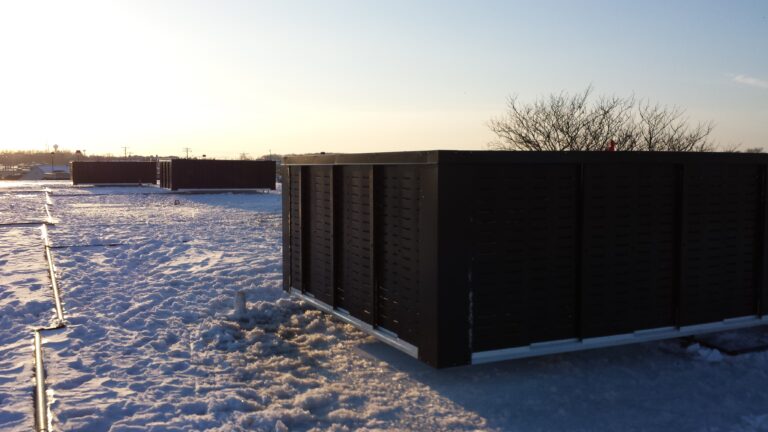
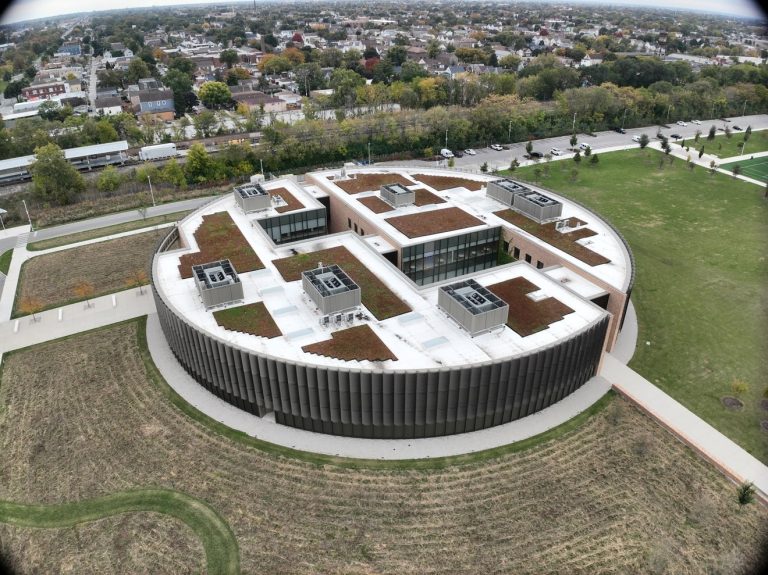
That is where teams get into trouble. A roof screen wall may satisfy a visual requirement, yet still create problems for service access, airflow, or waterproofing. A set of rooftop screen walls may look straightforward in elevation, but the real test comes later, when installers have to work around ducts, flues, hoods, piping, and manufacturer clearance requirements.
This is also why experienced teams rarely evaluate screening in isolation. They look at the roof assembly, the equipment layout, the mechanical curb or curb replacement strategy, and the service path around the unit. When that work happens early, options stay open. When it happens late, the project starts making tradeoffs instead of decisions.
North American Enclosures has built its position around that reality. As a provider of Spinnaker Industries architectural screening systems since 2010, the company works from the premise that screening has to satisfy design intent, municipal zoning, line-of-sight requirements, national code expectations, and equipment service needs at the same time. That framing is more useful than treating screening as a decorative accessory that gets solved at the end. In many cases, reviewing available system types early helps clarify how different approaches align with project conditions.
Where Projects Go Wrong
Late-Stage Decision Making
Many projects wait too long to lock in rooftop hvac screening. By the time the discussion becomes urgent, equipment locations are fixed, the roofing scope is already defined, and trade coordination is narrower than it was during design. At that point, the screening package is no longer being chosen on its own merits. It is being forced to fit decisions that were made without it in mind.
That shift matters because late-stage screening choices usually start with constraints. The team is asking what can still be attached, what can still be fabricated quickly, and what can still be installed without delaying the schedule. Those are understandable questions, but they are not the same as asking what system best fits the equipment, the roof, and the owner’s long-term needs.
In practice, this is where avoidable penetrations, cramped service clearances, and awkward panel layouts tend to enter the job.
Choosing Cost Over Fit
Budget pressure is real on every commercial build. The problem is not cost awareness. The problem is using rooftop equipment screen cost as the main filter while leaving out system fit, attachment method, service access, and lifecycle consequences.
A lower-priced option can become expensive very quickly if it requires additional structural work, creates more roof penetrations, or forces field modifications after delivery. That is especially true when the selected mechanical roof screen was priced as a generic assembly rather than engineered around the actual unit conditions.
This is where buyers sometimes miss the distinction between a panel price and a project cost. The panel price may look attractive. The project cost changes once waterproofing details, steel, site labor, hoisting, rework, and follow-up maintenance enter the picture. In some cases, understanding system performance criteria can help teams evaluate tradeoffs more clearly.
Lack of Trade Coordination
Roofers, HVAC contractors, structural teams, and screening installers do not make decisions from the same vantage point. Roofers are focused on membrane integrity. HVAC contractors care about access, airflow, and equipment manufacturer requirements. Screening teams are responsible for concealment, support strategy, and constructability. If those views are not reconciled early, the scope gaps show up in the field.
That is one reason equipment screen walls can fail even when no one made an obviously bad choice. The drawings may be reasonable. The intent may be reasonable. The issue is that each team solved its own piece without fully testing how the pieces interact.
The Ripple Effect of a Poor Rooftop Equipment Screening Choice
A weak screening decision usually does not fail all at once. It creates a chain of smaller problems that consume time, money, and attention.
The first issue is often waterproofing risk. When roof screen systems rely on unnecessary penetrations, the project adds more flashing work, more dependency on field conditions, and more long-term exposure if details are not maintained. Even when roof penetration flashings are installed properly, each added penetration is still another point the owner will live with after turnover.
The second issue is serviceability. A rooftop unit screening layout can look clean on drawings and still frustrate technicians once the job is operating. Looking at installed screen systems often reveals how access decisions play out in real conditions. If panels do not slide, remove, or clear the equipment as needed, service slows down and routine work becomes harder than it should be. North American Enclosures emphasizes access for this reason. Its direct attached and curb mounted systems are designed to preserve access on all sides while allowing doors to open to a 90 degree minimum.
The third issue is performance. Poorly considered hvac screening can interfere with required clearances or create airflow concerns around the equipment. Screening does not automatically cause that problem, but bad spacing, the wrong panel style, or the wrong placement can. This is why collaboration with HVAC equipment manufacturers matters. Clearance is not a styling preference. It is an operating requirement.
The fourth issue is schedule disruption. Once a system has to be modified in the field, other trades wait, adjust, or revisit work that should have been settled earlier. That is when a small decision starts behaving like a project problem.
Real-World Scenario: How One Decision Escalates
Consider a mid-sized commercial project with several packaged rooftop units. The architect has a valid line-of-sight concern, so the team includes a basic screening allowance early in design. The issue is that the allowance stays generic for too long.
As procurement approaches, the contractor chooses a lower-cost rooftop mechanical screen package that appears to satisfy the visual intent. However, the selected approach requires more penetrations than expected and was not fully coordinated with service access around the units. The roof is already moving, so the team proceeds rather than reopening the design.
During installation, the roofing contractor has to work around added attachment points and flashing details. Nothing fails immediately, but the scope becomes more labor-intensive than planned. Once the panels are in place, technicians find that access to certain service points is tighter than expected. A few sections of the assembly need field adjustment. That creates more labor, more coordination, and more frustration.
Six months later, the owner is not talking about the original panel price. The owner is dealing with a system that was harder to install, harder to service, and more expensive to correct than it needed to be. That is how one screening decision derails a project. The problem is rarely one dramatic mistake. It is usually a sequence of reasonable-looking shortcuts that compound over time.
How to Avoid Rooftop Equipment Screening Failures
Bring Screening Into Design Early
The most reliable projects decide on screening early enough to evaluate real conditions rather than assumptions. That means confirming roof type, unit layout, service zones, attachment options, and code or zoning visibility requirements before fabrication starts.
North American Enclosures regularly encourages early involvement because earlier coordination creates more viable system options. It is easier to compare direct attached, post mounted, and curb mounted approaches before the rest of the job has closed around them. In more complex projects, early system planning discussion can help resolve conflicts before they reach the field.
Think in Systems, Not Parts
A rooftop system does not care which trade drew the line item. Screening interacts with the roof, the unit, the support strategy, and the service path. That is why strong teams evaluate the full assembly instead of choosing a panel first and solving the rest later.
For some units, unit-mounted screening systems make sense because they avoid roof penetrations and preserve access.
For other conditions, post-mounted systems may be the better answer, especially when multiple units need to be concealed within a single assembly. These approaches often rely on structural coordination that extends beyond the screening scope itself.
Curb-mounted systems can also be effective for equipment such as exhaust fans, condensing units, and generators that do not have the internal structure needed for direct attachment.
In situations where equipment type and layout support it, post-mounted systems can provide a cleaner way to consolidate multiple units.
Projects that involve varied equipment types may also benefit from a curb-based approach that integrates directly with the unit support.
Curb-mounted systems are often used in those conditions because they align with how certain equipment is already designed to sit on the roof.
The point is not that one option is always better. The point is that the right option depends on the actual equipment and roof conditions.
Use Non-Penetrating Strategies Where They Make Sense
Non penetrating rooftop hvac screens are worth evaluating whenever roof integrity is a major concern. They can help reduce risk to the membrane and simplify coordination with the roofing scope. That said, the term should not be treated as a shortcut for every project condition. The real question is whether the selected approach is engineered for the unit, the wind load, and the service requirements.
North American Enclosures states that its direct attached and unit mounted systems avoid roof penetrations, preserve equipment access, and maintain unrestricted airflow when properly applied. That is a meaningful distinction because it links the mounting method to both roof protection and equipment performance.
What Decision-Makers Should Evaluate Before Choosing Rooftop Equipment Screening
Roof Type and Attachment Conditions
The first question is not visual. It is physical. What roof assembly is in place, and what attachment strategy makes sense for it? A new low-slope roof, an existing retrofit condition, and a crowded rooftop with limited working room are not equivalent situations.
This is where details such as roof sleepers, rooftop sleepers, roofing sleepers, roofing platforms, and load distribution can move from background issues to central design issues. Even a well-designed roof screening concept can become a problem if it ignores how the support strategy works on the actual roof.
Equipment Layout and Service Access
A screening system that blocks service is not finished just because it is installed. Access needs to be tested against the real unit, not assumed from a plan view. Door swing, filter change access, technician reach, and clearance around flues or powered exhaust components all matter.
North American Enclosures highlights sliding panel designs and accommodations for flues, hoods, economizers, ductwork, and piping because those details tend to determine whether a system remains workable after turnover. That focus is practical. Owners live with access decisions long after the project team leaves the site.
Panel Style, Airflow, and Visual Intent
Panel style is not only an aesthetic choice. Architectural louvers, punched louvers, open louvers, ribbed forms, and perforated metal panels all create different visual and performance outcomes. In some cases, perforated panels or a perforated metal screen may support the design intent well. In others, aluminum louvers or other metal screening panels may provide the better balance of concealment and airflow.
That decision should be based on the project’s actual priorities. If airflow is critical, service is frequent, or the equipment sits close to the panel line, those considerations should carry real weight. Decorative metal panels and decorative metal screen panels can be useful when the design calls for a stronger architectural expression, but they still need to respect equipment function.
Wind, Durability, and Long-Term Maintenance
Owners eventually judge the system they received, not the submittal they approved. They care whether the finish holds up, whether maintenance teams can work around the equipment, and whether the system feels durable over time.
North American Enclosures notes wind ratings up to 225 mph for its direct attached, post mounted, and curb mounted systems, along with baked powder-coated finishes intended for long-term durability. Those details matter because durability is not only about weather. It also affects how often the owner has to revisit the system for repair, repainting, or adjustment.
Some projects also have a sound component. Where noise control matters, acoustic screens or acoustical panel integrations may deserve evaluation alongside the visual screening scope.
Frequently Asked Questions
In some cases, broader architectural screening profiles help frame how different systems are applied across project types.
Industry examples can be found in architectural screening profiles, which show how these systems are used across different building types.
Does rooftop equipment screening always require roof penetrations?
No. Some systems attach directly to the unit or use other support strategies that avoid penetrating the membrane. Whether that is appropriate depends on the equipment, wind demands, and structural conditions.
Can screening affect HVAC performance?
Yes, if clearance and airflow are not considered correctly. Properly engineered screening should account for manufacturer requirements, service access, and operating space around the unit.
Is a rooftop hvac screening system the same as a full enclosure?
Not necessarily. Hvac enclosures, mechanical equipment enclosures, rooftop mechanical enclosures, and commercial enclosures can serve different purposes than open screening assemblies. Screening is often used to manage line of sight while preserving airflow and access.
What affects rooftop equipment screening cost the most?
Material choice, mounting approach, wind requirements, roof conditions, installation complexity, and the need for custom accommodations all influence cost. The lowest visible price is not always the lowest ownership cost.
Are RTU-specific systems worth separate consideration?
Usually, yes. An rtu screen, rtu screens, or a dedicated rtu screening approach may be more effective than a generic assembly when packaged rooftop units have specific access and clearance needs. The same applies to an rtu screen wall or other roof top unit screens designed around actual equipment geometry.
Final Thoughts
In some cases, publicly available company background information reflects how specialized and technical this segment of construction has become.
That level of specialization becomes more apparent when reviewing company background information tied to firms working in this space.
Most project teams do not make bad screening decisions because they are careless. They make them because screening looks simpler than it is until the roof, the equipment, and the service requirements all converge.
That is why the better question is not whether a screen will conceal the equipment. The better question is whether the selected system will still make sense after installation, during service, and years into ownership. Once you frame the issue that way, the value of early coordination becomes much clearer.
North American Enclosures has built its offering around that more complete view of screening. The company’s emphasis on engineered system selection, access, airflow, code alignment, and installation support reflects the way real projects succeed or fail.
If a team wants to avoid preventable rework, access problems, and waterproofing risk, the screening conversation needs to happen before the job runs out of room for good decisions.