
What Is Architectural Screening?
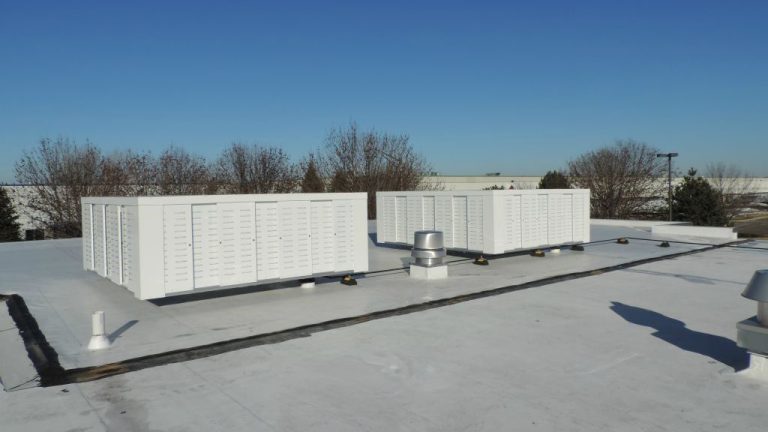
Rooftop mechanical screen types hides mechanical equipment. It maintains clean lines and helps buildings meet code. Screens also reduce visual clutter, protect equipment, and prevent unauthorized access.
Architectural louvers, perforated metal panels, and metal screen panels are often used. These allow air to pass through while shielding the view. Effective screening supports equipment performance and improves building appearance.
Most cities require mechanical screening. Local codes often demand rooftop units stay hidden from view. Choosing the right rooftop mechanical screen type ensures both compliance and functionality.
Why Rooftop Mechanical Screen Types Matter
Not all rooftop layouts are alike. Not every screen system works for every rooftop. That’s why it’s essential to compare rooftop mechanical screen types.
Each type impacts installation, airflow, access, and structural load. Some systems surround multiple units. Others work best for single-point equipment.
Choosing between curb-mounted and post-mounted screens helps avoid compliance issues and costly changes. Getting this decision right early simplifies design and construction.
Rooftop Mechanical Screen Types: Curb-Mounted vs Post-Mounted
| Feature | Curb-Mounted | Post-Mounted |
| Mount Location | Equipment curb | Structural posts anchored to roof |
| Roof Penetrations | Minimal (at curb) | Minimal (post points only) |
| Unit Structure Needed | Not required | Not required |
| Best Application | Single units (fans, condensers, etc.) | Grouped units or full rooftop zones |
| Access | Sliding panels standard | Sliding or fixed panels |
| Wind Load Rating | Up to 225 mph | Up to 225 mph |
| Aesthetic Flexibility | Moderate | High |
| Customization Options | High | High |
Both systems help hide rooftop equipment. However, the way they work with your building and gear is very different.
Deep Dive: Curb-Mounted Screen Systems
Curb-mounted screens attach to the structural curb beneath the HVAC unit. They don’t connect to the unit itself. That’s ideal when equipment lacks the strength to support added weight.
This approach keeps penetrations within the curb footprint. It preserves the membrane and helps protect your roof warranty.
Panels slide open on all sides. That means fast, simple access for maintenance teams. The design maintains airflow and clearances. It’s great for curbless units like fans and generators.
Advantages of Curb-Mounted Systems:
- Minimal roof penetrations
- Doesn’t rely on unit strength
- Panels allow full access
- Custom-fit to each curb
- Wind-rated up to 225 mph
Curb-mounted systems suit tight rooftops or projects needing minimal disruption. They install cleanly and blend well into smaller equipment clusters.
Use this system when preserving roof warranties is key and where equipment lacks structure.
Deep Dive: Post-Mounted Screen Systems
Post-mounted systems attach to the roof using structural posts. They don’t connect to any HVAC equipment or curb. That makes them highly flexible.
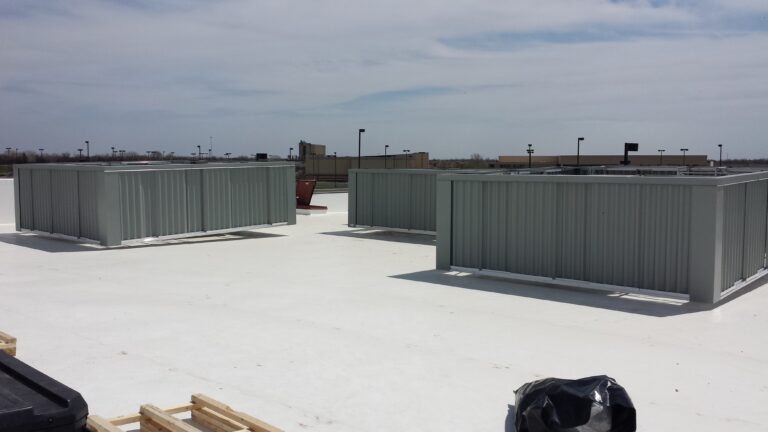
This type is best for shielding multiple units or full equipment zones. Panels attach between posts to form a complete enclosure. Heights and widths are custom-built.
You can use sliding or fixed panels depending on access needs. Wind ratings match curb-mounted systems at up to 225 mph.
Advantages of Post-Mounted Systems:
- Ideal for large or grouped equipment
- Supports full rooftop perimeter screens
- Minimizes penetrations with efficient layout
- Works with various panel styles
- Accommodates airflow and clearance codes
Use this system when aesthetics, flexibility, or multi-unit coverage is a priority. It works especially well on larger rooftops or new builds.
How to Choose the Right Rooftop Mechanical Screen Type
1. Equipment Layout
Grouped or scattered? Post-mounted works for grouped layouts. Curb-mounted fits single units.
2. Roof Condition
Preserve roof integrity with either system. Curb-mounted limits roof contact. Post-mounted uses minimal, planned penetrations.
3. Access Needs
Both allow easy service. Curb-mounted comes standard with sliding panels. Post-mounted supports both sliding and fixed.
4. Aesthetic Goals
Post-mounted screens support full-perimeter designs. Choose this type when visual consistency is essential.
5. Project Timeline
Smaller curb-mounted setups can install faster. Post-mounted systems may need more lead time.
6. Wind Load Requirements
Both options meet codes in high-wind zones. Each is engineered to withstand 225 mph gusts.
Start with clear equipment drawings and code checks. These decisions guide the right screening approach.
Project Scenarios and Recommendations
Small Rooftop, One Fan
Choose curb-mounted. It’s compact, simple, and minimizes work.
Cluster of Condensers
Use post-mounted. It creates one enclosure with shared access.
Visual Impact Matters
Post-mounted offers the best architectural integration. Panels can match your building’s design.
Retrofits or Tight Budgets
Curb-mounted systems often install faster and cost less upfront.
FAQs: Curb-Mounted vs Post-Mounted Screens
Are both systems engineered for strong winds?
Yes. Each type meets wind load codes up to 225 mph.
Can I use either system for grouped HVAC units?
Post-mounted is better for multiple units. Curb-mounted suits single equipment setups.
Do screens void roofing warranties?
No. Installers use curb or structural points, avoiding membrane damage.
Can panels match building finishes?
Yes. Both systems support powder-coated colors and custom panel types.
Which screen type is easiest to service?
Both are easy. Curb-mounted systems offer sliding panels by default. Post-mounted screens can be built with sliding or fixed options.
About the Manufacturer
Rooftop screening matters. Whether you’re meeting code, improving aesthetics, or protecting equipment, your system must fit your project.
We provide high-performance screens built to suit every need. From small fan enclosures to large multi-unit screen walls, we guide you through every choice.
With smart engineering, airflow awareness, and clean design, our systems work as hard as the equipment they protect.
Explore Screen Panel Styles
Looking for design flexibility? We offer many panel types, including:
- Perforated metal panels
- Open and punched louvers
- Flat and ribbed panels
All panels feature powder-coated finishes for durability and visual appeal. Choose from standard or custom color palettes.
Need weather resistance? Our finishes resist corrosion and wear—even in harsh climates.
Final Thoughts: Choosing the Right Rooftop Mechanical Screen Type
Choosing the best rooftop mechanical screen type means balancing airflow, aesthetics, access, and budget.
Curb-mounted systems work well for individual equipment and faster installs. Post-mounted systems offer flexibility and coverage for grouped gear.
Both support code compliance, easy service, and strong visual results. Make your choice early to stay on schedule and on budget.
Get started by reviewing your layout, local code, and service needs. Then choose the right system for your rooftop.