
What Is Architectural Screening?
Ever walked past a building and noticed… nothing? No clunky rooftop units, no vents sticking out. Just clean lines and a seamless skyline. That’s architectural screening quietly doing its job.
You might not pay attention to it when it’s done well. But when it’s missing, it’s hard to ignore. A beautifully designed building suddenly looks cluttered or unfinished. Mechanical systems like HVAC units and generators are essential, but they weren’t exactly made to complement the architecture.
That’s where screening comes in. It helps mechanical equipment visually disappear into the building’s form. It’s not just about aesthetics either. In many cities, it’s required by code. Equipment can’t be visible from certain angles or public spaces.
The Importance of Thinking About Screening Early
Here’s the thing. A lot of teams don’t think about screening until the very end of a project. The units go in, power’s on, everything looks wrapped up… until someone realizes the rooftop equipment is clearly visible from the street. And now it’s a zoning issue.
By that point, your options are more limited and more expensive. You might have to rework layouts, add structural supports, or delay inspections. But if screening is considered early in the design phase, it’s a smoother process. Better airflow. Easier access. Fewer surprises.
And honestly, buildings just look more finished when screening is part of the plan from the start. It ties everything together.
Introduction: Why HVAC Screen System Types Matter
Picture this. Your brand-new rooftop HVAC system is installed, humming away like a charm. Then you get the call. It fails zoning inspection. Not because it doesn’t work, but because it’s visible from the street. Many cities enforce what’s known as a “line of sight” zoning code. That means rooftop equipment must be concealed from view when observed from the edge of the property or nearby public spaces. From their perspective, bulky mechanical systems disrupt the architectural flow of the neighborhood or draw attention to something that should stay behind the scenes. If the equipment is visible from public areas or adjacent properties, it’s often flagged. Happens more often than you’d think.
Choosing between HVAC screen system types isn’t just a design decision. It’s about staying compliant with local building codes, meeting visibility ordinances, and protecting long-term performance. In many cases, it’s also about making sure your rooftop doesn’t become the building’s biggest eyesore.
That’s where screen systems come in. And understanding the difference between direct-attached and post-mounted options can save a ton of future headaches.
What Are the Main HVAC Screen System Types?
There are two primary types of rooftop screens: direct-attached and post-mounted. Both serve the same general purpose, to conceal and protect HVAC units, but how they do it is pretty different.
North American Enclosures (NAE) offers both types. Each is custom-engineered to fit the specific demands of your rooftop setup. Here’s how they stack up:
| Feature | Direct-Attached | Post-Mounted |
| Attachment | Mounted directly to HVAC cabinet | Secured to roof structure |
| Roof Penetration | None | Minimal |
| Accessibility | Sliding panels, all sides | Sliding or fixed panels |
| Best Use | Packaged RTUs | Multi-unit, perimeter rooftop systems |
| Wind Rating | Up to 225 mph | Up to 225 mph |
| Customization | High | High |
You might not need both types on one project, but understanding the pros and cons of each can help you make a better call.
Deep Dive: Direct-Attached Screen Systems
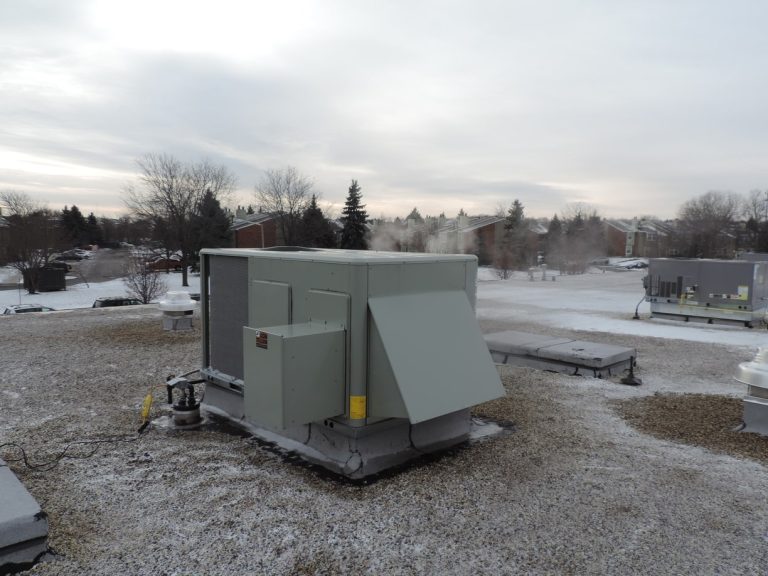
Here’s the basic idea. Direct-attached screening systems connect straight to the HVAC unit. No roof penetrations needed. That means fewer structural concerns and no roofing warranty voids due to unnecessary holes in the membrane.
Because these screens attach directly to the cabinet, they maintain unrestricted airflow. Equipment doors still open a full 90 degrees. And the sliding panels allow easy access for techs on all sides.
Now, here’s where we differ from many others in the industry. Some competitors opt for rigid, fixed-panel setups that complicate maintenance. Others might bolt panels directly to equipment in a way that blocks service access or airflow. We’ve seen installs where you have to remove half the screen just to reach a control panel. That’s not just inconvenient. It’s a safety issue, a time sink, and frankly, a maintenance nightmare. Every extra minute spent dismantling panels adds risk, labor costs, and wear on the unit. And if an emergency happens, you can’t afford that kind of delay.
At North American Enclosures, we design with service in mind. Our systems feature sliding panels as standard, not upgrades. That way, technicians can get in and out without disassembling anything. Plus, we account for manufacturer clearance requirements from the start. No guesswork. No retrofitting.
This system shines when you need a compact, low-profile solution that doesn’t touch the roof structure. Think chillers, RTUs, and packaged units.
Best for:
- Projects where roof integrity is a top concern
- Rooftops with limited space
- Sites needing a code-compliant yet subtle solution
Pro tip: Direct-attached systems can often be installed late in a project. That flexibility helps if you’re trying to meet a deadline without tearing up already-installed components.
And yes, these screens still meet code. They’re engineered to withstand up to 225 mph wind loads, which is the highest in the industry.
Deep Dive: Post-Mounted Screen Systems
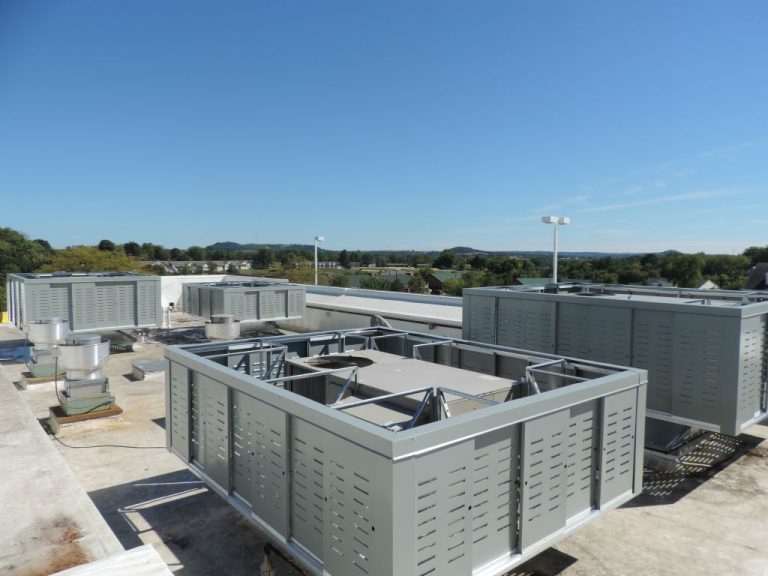
Post-mounted screen systems are more traditional. They anchor to the building structure, usually with just a few penetrations. That keeps the HVAC units untouched while still allowing for full screening.
These systems are great when you need to hide multiple pieces of equipment within one enclosure. They also work well for full perimeter rooftop layouts.
Want flexibility? Post-mounted systems can be fitted with either sliding or fixed panels, depending on your access needs.
Now, here’s something worth knowing. A lot of competitors will oversize the structural base or use far more anchor points than they actually need. That leads to double the roof penetrations, sometimes even more. Not only does that slow things down on site, but it also increases the chance of future leaks and callbacks.
Here’s where we do things differently. At North American Enclosures, we use a smarter structural layout that typically requires half as many penetrations. That’s a big deal if you’re working with delicate membrane roofs or trying to preserve manufacturer warranties.
Some competitors try to avoid penetrations too, but they go about it by adding weight. They bulk up the base with heavy ballast to keep everything stable. But that ends up pushing more load onto the roof structure, which sort of defeats the whole purpose of going penetration-free in the first place.
We aim for balance. Lightweight, code-compliant, and engineered to fit, not fight, the rooftop.
Fewer roof penetrations. Less weight. Lower risk. Simpler installs.
Structural posts can go up to 156 inches tall, and panels are built custom to match grouped equipment.
Best for:
- Situations where direct attachment isn’t feasible
- Projects requiring extensive visual concealment
- Perimeter screening
Real-world example: One client in Denver had eight RTUs and a backup generator to screen. We used a post-mounted system, which not only reduced the enclosure cost by more than 20%, we did it with half of the roof penetrations our competitor required. That also saved the client nearly half the cost of the associated roofing work, while still meeting both zoning and wind load requirements.
What to Consider When Choosing a System
You don’t always get a straightforward answer. But asking the right questions makes the choice easier.
Structural Load Capacity
Can your roof structure handle extra posts? If not, direct-attached might be the better fit.
Zoning and Code Compliance
Some municipalities require full line-of-sight screening. Others just care about sight from the street. Check early.
Maintenance Access Requirements
Will your team need to access the HVAC doors regularly? If yes, sliding panels with 90-degree door clearance becomes essential.
Visual and Architectural Intent
Sometimes it’s not about hiding things but integrating them into the building’s overall design. A louvered screen wall or architectural screen wall might do the trick.
Wind Load and Environmental Exposure
For hurricane or tornado zones, you’ll want something with a solid wind rating. Both screen types NAE offers are designed, tested, and rated up to 225 mph at 3-second gusts—the highest in the industry.
Roof Layout and Equipment Density
Tight layout with grouped equipment? Post-mounted could be more efficient. A single rooftop screen wall may cover all of it.
Common Mistakes to Avoid
We’ve seen it all. Here are a few things to steer clear of:
Choosing a system type before reviewing the equipment layout Ignoring manufacturer requirements for airflow and access Forgetting to check local rooftop equipment screening ordinances Overlooking wind load data or regional weather risks Delaying screen planning until the end of the project
Tip: Loop in your screen system provider as early as possible. It could prevent rework, resubmittals, or worse—fines.
How North American Enclosures Helps You Decide
At North American Enclsoures, we don’t just offer rooftop screens. We guide you through the whole process.
We know rooftop screening can get complicated. There are zoning issues, structural concerns, clearance needs, manufacturer requirements, and no two rooftops are ever exactly alike. That’s why we take the time to understand the unique challenges of your project. We’re not here to sell you a one-size-fits-all solution. We’re here to work with you, one detail at a time, until we land on the right answer.
From design to install, our engineers and product specialists walk your team through every stage. We match the right HVAC screen system type to your unique project.
Need proof? We’ve completed over 2,500 screens across 40+ states. That includes everything from compact roof equipment screen jobs to full post-mounted rooftop enclosure walls.
As a trusted partner of Spinnaker Industries, we combine decades of experience with innovative manufacturing. Our systems don’t just look good. They perform, even in extreme conditions.
Install teams are certified too. That means a smooth handoff from delivery to cleanup, without the hiccups.
Frequently Asked Questions (FAQ)
Can direct-attached screens be installed on any HVAC unit?
Most units, yes. But it depends on manufacturer specs and available clearance. We’ll evaluate it during design.
What if my city requires 100 percent equipment screening?
We’ve handled plenty of these. Post-mounted systems are usually the best fit for full rooftop coverage.
Do your screens void HVAC warranties?
No. Our designs respect manufacturer clearance and airflow requirements. In fact, avoiding roof penetrations can help preserve warranties.
Can you match existing building finishes or colors?
We offer a wide range of panel styles as well as color and texture options to suit your architecture.
How long does installation usually take?
It varies by project size, but we’ll give you a clear timeline upfront, and our factory-trained teams stick to it.
Which Screen System Is Right for You?
There’s no universal answer. Some rooftops demand post-mounted systems. Others make more sense with direct-attached units.
It depends on the gear. It depends on the building. And honestly, it depends on your timeline and budget.
What matters is starting the conversation early. That way, you’re designing around the best solution, not working backward from a code violation.
Let’s Find the Right Fit for Your Rooftop
Got a rooftop that needs screening? Not sure which direction to go?
We’re here to help. Whether you’re mid-spec or still sketching ideas, our team at North American Enclosures is ready to talk.
Let’s find the HVAC screen system type that meets your code, matches your architecture, and keeps your units running right.